 Call us: 02030260534
What is the 50 50 rule for appliances?
The 50 50 rule states that if an appliance is more than halfway through its expected lifespan and develops a major fault, it may be more practical to replace it rather than repair it. However, if the appliance is relatively new and the issue is minor, repairing it is usually the better option.
This rule helps homeowners make informed decisions and avoid repeated breakdowns.
If your appliance has stopped working or is showing warning signs, book a professional appliance inspection today or call +442030260534 for fast service across Romford, Ilford, Essex, and London nearby areas.
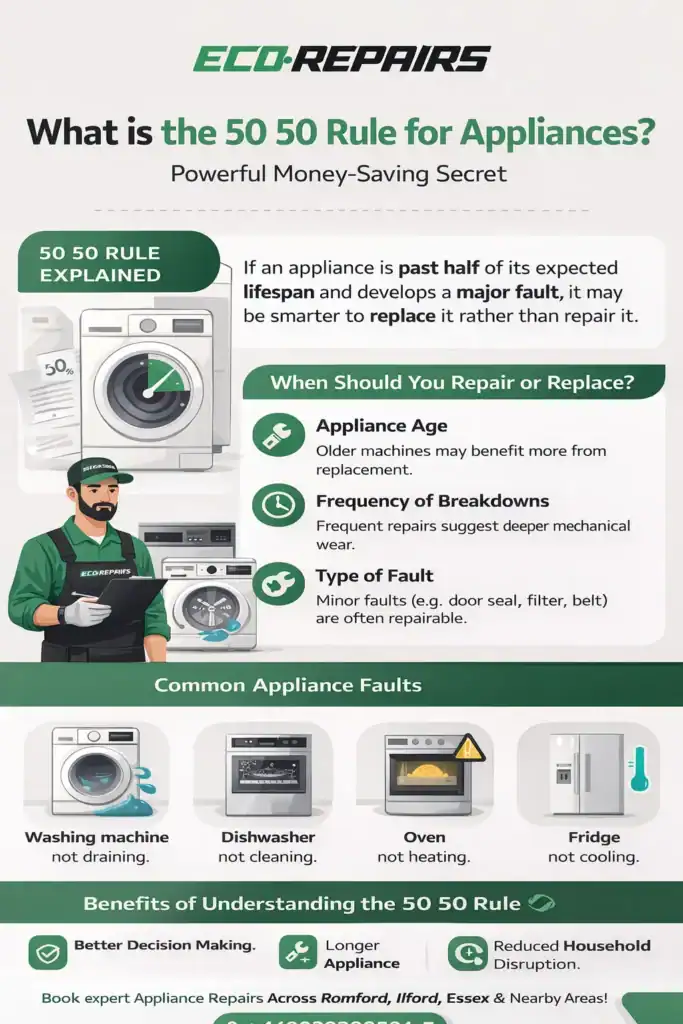
What is the 50 50 Rule for Appliances? Powerful Repair Secret
Household appliances quietly run the background of daily life. Washing machines churn through laundry, dishwashers handle piles of dishes, and ovens cook family meals. But when these machines suddenly stop working, homeowners face a common dilemma: repair the appliance or replace it entirely.
This is where the 50 50 rule for appliances becomes incredibly helpful. Many professional technicians use this rule as a guideline to determine whether repairing an appliance makes sense or whether replacement is the smarter option.
Understanding What is the 50 50 rule for appliances can help homeowners make smarter decisions, extend appliance life, and avoid unnecessary replacements.
This guide explains the 50 percent rule in appliance repair, how technicians apply it, common appliance faults, repair processes, and maintenance tips that keep appliances working longer.
If you are experiencing appliance problems in Romford or nearby areas, you can always book professional help through appliance repair services or contact experts directly through contact appliance repair experts.
What is the 50 50 Rule for Appliances?
The 50 50 rule for appliances is a simple decision-making guideline used by technicians and homeowners.
The rule suggests that when an appliance has passed half of its expected lifespan and develops a significant issue, replacement may be the smarter option rather than continuing repairs.
This rule is widely discussed in consumer advice resources and appliance maintenance guides such as those published by the Energy Saving Trust and other home maintenance organizations.
For example:
A washing machine typically lasts around 10 years.
If the appliance develops a major mechanical problem after around five years or more of use, technicians evaluate whether repair will offer long-term reliability.
The goal of the 50 percent rule in appliance repair is not to force replacement but to avoid repeated breakdown cycles.
What Is the “50 Percent Rule” in Appliance Repair
The 50 percent rule is based on two key factors:
- Appliance age
- Severity of the fault
When both factors indicate significant wear, replacing the appliance may provide better long-term reliability.
However, many appliances still benefit from professional repair if the issue is minor or if the appliance is relatively new.
What is the 50 50 rule for appliances UK
In the UK, the 50 50 rule for appliances is often used by repair technicians as a practical guideline when advising customers.
British consumer organizations such as Which? also provide advice on appliance lifespans and repair considerations.
Typical appliance lifespan estimates include:
Washing machines: 10 to 12 years
Dishwashers: 8 to 10 years
Fridges: 10 to 15 years
Ovens: 13 to 15 years
If an appliance is still early in its life cycle, professional repair can often restore full functionality.
For homeowners in Romford, Hornchurch, Upminster, Ilford, Dagenham, Brentwood, and Rainham, professional technicians can inspect the appliance and recommend the best solution.
You can also explore professional appliance repair solutions for expert diagnostics and service.
What is the 50 50 Rule for Appliances Repair or Replace
Many homeowners struggle with the decision between repair and replacement.
Understanding What is the 50 50 rule for appliances repair or replace helps remove the guesswork.
The rule considers three major elements.
Appliance Age
Older appliances naturally develop wear on internal parts such as motors, pumps, heating elements, and control boards.
When an appliance has already completed a significant portion of its expected lifespan, repeated repairs may not be practical.
Frequency of Breakdowns
If an appliance requires frequent repairs, this suggests deeper mechanical wear.
Technicians often recommend evaluating the long-term reliability before continuing further repairs.
Type of Fault
Some appliance problems are minor and easily repairable.
Examples include:
Door seal replacement
Drain blockages
Control resets
Loose wiring
However, more complex faults may signal deeper mechanical wear.
What is the 50 50 rule for appliances explained
To fully understand What is the 50 50 rule for appliances explained, imagine the following situation.
A washing machine has been working reliably for several years but suddenly stops draining water.
A technician inspects the machine and identifies the issue as a blocked drain pump.
In this situation, repair is usually recommended because the fault is isolated and repairable.
However, if the machine has multiple failing components such as the motor, pump, and control board, technicians may recommend evaluating replacement.
The goal of the 50 50 rule is simply to avoid ongoing mechanical failures.
What is the 50 50 Rule for Appliances and Repairs
When appliances fail, professional technicians follow a structured repair process.
Understanding this process helps homeowners see how repair decisions are made.
Step 1: Diagnostic Inspection
Technicians inspect the appliance for visible faults, internal wear, or electrical problems.
Modern appliances often include error codes that help identify issues.
Step 2: Component Testing
Internal parts such as motors, pumps, heating elements, and control boards are tested to determine functionality.
Step 3: Repair Assessment
Technicians determine whether the fault can be repaired reliably.
If the appliance is relatively young and the fault is minor, repair is recommended.
Step 4: Long Term Reliability Check
The technician evaluates whether the appliance will remain reliable after repair.
This is where the 50 percent rule becomes useful.
What is the 50 50 Rule for Appliances Example
Let’s explore a practical example.
Washing Machine Scenario
A homeowner searches for What is the 50 50 rule for appliances washing machine after their appliance stops spinning.
The technician discovers a worn drive belt.
This is a common fault and can easily be repaired.
However, if the machine also has a failing motor and control board, technicians may recommend evaluating replacement.
Dishwasher Scenario
Another common search is What is the 50 50 rule for appliances dishwasher repair.
Dishwashers often develop issues such as:
Blocked spray arms
Drain pump failures
Door seal leaks
Heating element problems
If the dishwasher is relatively new, repair usually restores full performance.
However, when multiple internal components are failing, replacement may be considered.
Common Appliance Faults Homeowners Experience
Many appliance breakdowns occur due to common mechanical or electrical issues.
Some of the most frequent faults include:
Washing machine not draining
Dishwasher not cleaning properly
Oven not heating evenly
Fridge not cooling
Appliance making unusual noises
According to consumer guidance from the Energy Saving Trust, maintaining appliances properly can significantly extend their lifespan.
Another useful resource on appliance reliability and maintenance is:
https://go-assist.co.uk/blog/your-appliance-maintenance-guide
For electrical safety guidance regarding appliances:
Benefits of Understanding the 50 50 Rule
Understanding What is the 50 50 rule for appliances and repairs offers several benefits.
Better Decision Making
Homeowners can avoid unnecessary replacements while also preventing repeated breakdown cycles.
Longer Appliance Lifespan
Minor repairs performed early can extend appliance life significantly.
Reduced Household Disruption
Professional repairs restore appliances quickly, allowing daily routines to continue smoothly.
Environmental Benefits
Repairing appliances instead of replacing them helps reduce electronic waste.
Appliance Maintenance Tips to Prevent Breakdowns
Preventive maintenance can significantly reduce appliance problems.
Clean Filters Regularly
Washing machines and dishwashers rely on clean filters to operate efficiently.
Avoid Overloading Appliances
Overloading puts excessive strain on motors and moving parts.
Inspect Hoses and Connections
Leaks and loose hoses are common causes of appliance failure.
Run Regular Cleaning Cycles
Dishwashers and washing machines benefit from periodic cleaning cycles that remove buildup.
Schedule Professional Servicing
Routine inspection by trained technicians helps detect early warning signs.
Homeowners across Romford, Hornchurch, Upminster, Ilford, Dagenham, Brentwood, and Rainham can schedule inspections through appliance repair booking.
Why Professional Appliance Repair Matters
Professional technicians understand appliance systems in detail.
Attempting repairs without technical knowledge can sometimes cause additional damage.
Professional repair services offer:
Accurate diagnostics
Proper replacement parts
Safe electrical repairs
Reliable long-term solutions
This is why many homeowners rely on trusted appliance repair specialists for fast and reliable solutions.
Service Areas
Professional appliance repair services are available across:
Romford
Hornchurch
Upminster
Ilford
Dagenham
Brentwood
Rainham
Engineers provide fast response times and reliable repairs across Essex and London nearby areas.
Frequently Asked Questions
What is the 50 50 rule for appliances?
The 50 50 rule for appliances suggests that when an appliance has passed half of its expected lifespan and develops significant issues, replacement may be considered instead of continued repairs.
What is the 50/50 rule for appliances?
The 50/50 rule is a guideline used by technicians to evaluate appliance age and fault severity before recommending repair or replacement.
What is the 50 50 rule for appliances when to replace?
Replacement may be considered when the appliance is older and experiencing multiple mechanical failures that reduce reliability.
What is the 50 50 rule for appliances maintenance rule?
The maintenance rule emphasizes regular servicing, proper usage, and early repair to extend appliance lifespan and reduce major failures.
What is the 50 50 rule for appliances example?
An example would be a washing machine with a simple blocked drain pump. Repair is recommended because the fault is isolated and easily fixable.
If your appliance is showing signs of failure, book a professional repair today or call +442030260534 for fast service in Romford, Ilford, Essex, and London nearby areas.