 Call us: 02030260534
If your washing machine is not spinning properly in Ilford, Romford, or nearby areas, the most common causes are overloaded drums, blocked pumps, faulty door locks, or drainage issues. These problems can quickly lead to wet clothes and machine damage if ignored.
For fast and reliable help, call 02030260534 now for same-day washing machine repair in Hornchurch, Romford, Ilford, Dagenham, Upminster, Brentwood, Rainham, and across Essex and London.
You can also:
- Check our appliance repair specialists
- Explore professional repair services
- Or directly book appliance repair
Washing Machine Not Spinning Properly? Intrduction
It usually happens at the worst possible time. You open the washing machine expecting clean, fresh clothes… but instead, everything is soaking wet. The drum has stopped spinning properly, and now you’re left wondering what went wrong.
This is one of the most common issues reported across Ilford, Romford, and Essex homes. Whether it’s a busy family household in Dagenham or a flat in Upminster, a washing machine not spinning properly can quickly disrupt your daily routine.
The good news is that most spin problems are caused by a few common mistakes. In this guide, we’ll break down exactly what causes these issues, how to fix them, and when to call a washing machine repair near me for professional help
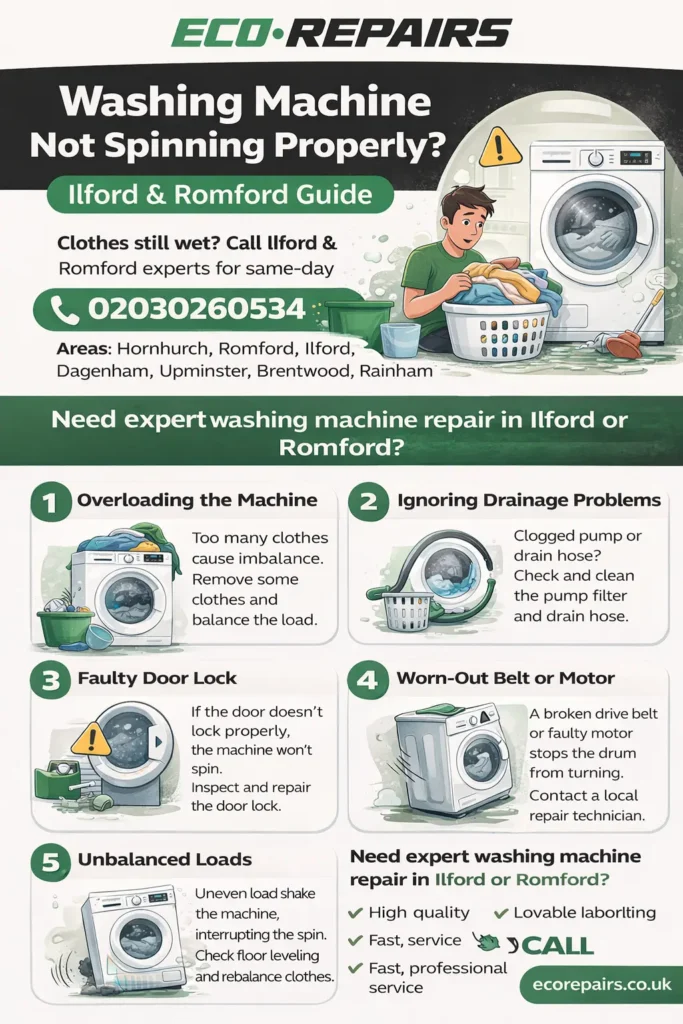
Washing Machine Not Spinning Properly? 5 Mistakes to Avoid
Mistake 1: Overloading the Machine
One of the biggest reasons a washing machine won’t spin UK households face is simple overloading.
When too many clothes are packed into the drum:
- The machine becomes unbalanced
- The motor struggles to rotate
- The spin cycle either slows down or stops completely
Real issue:
Many customers in Romford report that their washing machine spin cycle not working is due to heavy bedding loads or mixed fabrics.
Quick fix:
- Remove some clothes
- Run a smaller cycle
- Distribute weight evenly
Mistake 2: Ignoring Drainage Problems
If your washing machine not spinning but draining poorly, the issue often lies in the drainage system.
Common causes:
- Blocked pump filter
- Clogged drain hose
- Debris stuck inside the pump
Real-life scenario:
In Ilford homes, lint, coins, or small items often block the pump, stopping the spin cycle from activating.
Step-by-step check:
- Turn off power
- Locate the pump filter
- Remove debris carefully
- Restart the cycle
For safety and proper diagnosis, it’s best to contact professional repair services if unsure.
Why Is Your Washing Machine Not Spinning Properly? (Ilford & Romford Guide)
Mistake 3: Faulty Door Lock Mechanism
Modern machines are designed not to spin if the door isn’t securely locked.
Signs:
- Machine starts but stops before spin
- Clicking sound without movement
- Error codes
This is a common issue behind washing machine not spinning Ilford complaints.
Solution:
- Check if the door closes properly
- Inspect latch alignment
- Call a technician if lock is faulty
Mistake 4: Worn-Out Drive Belt or Motor Issues
If the drum isn’t moving at all, the issue may be mechanical.
Common faults:
- Broken drive belt
- Motor malfunction
- Carbon brush wear
These problems are often reported in washing machine not spinning Romford cases, especially in older machines.
What happens:
The motor runs, but the drum doesn’t rotate effectively.
Professional fix required:
This is not a DIY job. You’ll need experienced appliance repair specialists to safely repair or replace parts.
Mistake 5: Unbalanced Loads and Machine Positioning
A washing machine that shakes violently or stops mid-cycle is usually unbalanced.
Causes:
- Uneven floor
- Heavy items on one side
- Incorrect installation
This leads to:
- Interrupted spin cycles
- Excessive vibration
- Long-term damage
Quick fix:
- Adjust machine leveling
- Balance laundry evenly
Common Problems Behind Washing Machine Not Spinning Properly
Here are the most frequent faults seen across Hornchurch, Brentwood, Rainham, and surrounding areas:
- Blocked pump filters
- Faulty door locks
- Overloaded drum
- Drainage issues
- Worn belts or motor failure
Each of these can stop your washing machine not spinning properly and worsen over time if ignored.
How to Fix Washing Machine Spin Problems (DIY Guide)
Before calling an engineer, try these steps:
Step 1: Check Load Size
Avoid overloading and redistribute clothes.
Step 2: Inspect Drainage
Clean the pump filter and check hoses.
Step 3: Reset the Machine
Turn off power for a few minutes and restart.
Step 4: Check Door Lock
Ensure it closes securely.
Step 5: Run Test Cycle
Try a short spin cycle with minimal load.
If the issue persists, it’s time to book appliance repair.
Why Choose Eco Repairs (Local Expert Advantage)
When dealing with washing machine repair Romford or Ilford, choosing the right team matters.
What sets us apart:
- Same-day service availability
- Experienced engineers
- Local coverage across Essex & London
- Reliable diagnostics and repairs
We handle all major issues including:
- Washing machine not spinning
- Washing machine spin cycle not working
- Emergency breakdowns
Explore our appliance repair specialists or check our professional repair services to get started.
Areas We Cover
We provide expert washing machine repairs across:
- Romford
- Ilford
- Hornchurch
- Dagenham
- Upminster
- Brentwood
- Rainham
- Essex
- Greater London
No matter where you are, our team is ready for same day washing machine repair Romford and nearby areas.
When to Call a Professional Engineer
You should call an expert if:
- The drum is not spinning at all
- The machine makes unusual noises
- Water is not draining
- The issue repeats after reset
Delaying repairs can lead to more serious damage.
For urgent issues, contact emergency washing machine repair London services immediately.
Benefits of Professional Repair Services
Choosing professional repair ensures:
- Accurate fault diagnosis
- Safe repairs
- Longer appliance lifespan
- Prevention of future breakdowns
Instead of temporary fixes, you get long-term reliability.
Maintenance Tips to Prevent Spin Issues
To avoid future problems:
- Do not overload the machine
- Clean filters regularly
- Check pockets before washing
- Use correct detergent amounts
- Schedule routine servicing
These simple steps can prevent most washing machine not spinning properly issues.
FAQs
1. Why is my washing machine not spinning but draining?
This usually indicates a motor, belt, or imbalance issue.
2. Can I fix a washing machine not spinning myself?
Basic issues like blockages can be fixed, but mechanical faults need professional repair.
3. How do I know if the pump is blocked?
Water won’t drain properly and the machine may stop before spinning.
4. When should I call a repair engineer?
If the problem persists after basic checks or involves electrical/mechanical parts.
5. Do you offer same-day repair in Romford and Ilford?
Yes, same-day service is available across all nearby areas.
FINAL CTA
Still dealing with a washing machine not spinning properly?
Don’t wait for the problem to get worse.
Call 02030260534 now for fast, reliable, same-day repair in Romford, Ilford, Hornchurch, Dagenham, Upminster, Brentwood, Rainham, Essex, and London.
Or:
- Visit our appliance repair specialists
- Explore professional repair services
- Or instantly book appliance repair
External High-Authority References
- UK appliance safety and usage guidance: https://www.which.co.uk
- Energy efficiency advice: https://www.energysavingtrust.org.uk