 Call us: 02030260534
If your washer dryer not drying clothes, the most common causes are blocked filters, faulty heating elements, overloaded drums, or ventilation issues. In many cases, a quick fix can solve it, but persistent issues need expert attention.
Serving Ilford, Romford, Hornchurch, Dagenham, Upminster, Brentwood & Rainham, our engineers provide same-day appliance repair for washer dryers, washing machines, ovens, and dishwashers.
Call now or book appliance repair for fast service
Trusted local appliance repair specialists ready today
Introduction: When Laundry Day Turns Into a Nightmare
You load your washer dryer, press start, and walk away expecting warm, dry clothes. But hours later… your clothes feel like they’ve just come out of a cold mist.
Sound familiar?
This is one of the most common issues homeowners face: Washer Dryer Not Drying Clothes. It’s frustrating, time-wasting, and often confusing because the machine seems to work fine.
Let’s break it down like a local expert would, not just theory, but real-life faults, fixes, and when to call in professionals.
Washer Dryer Not Drying Clothes – Common Causes Explained
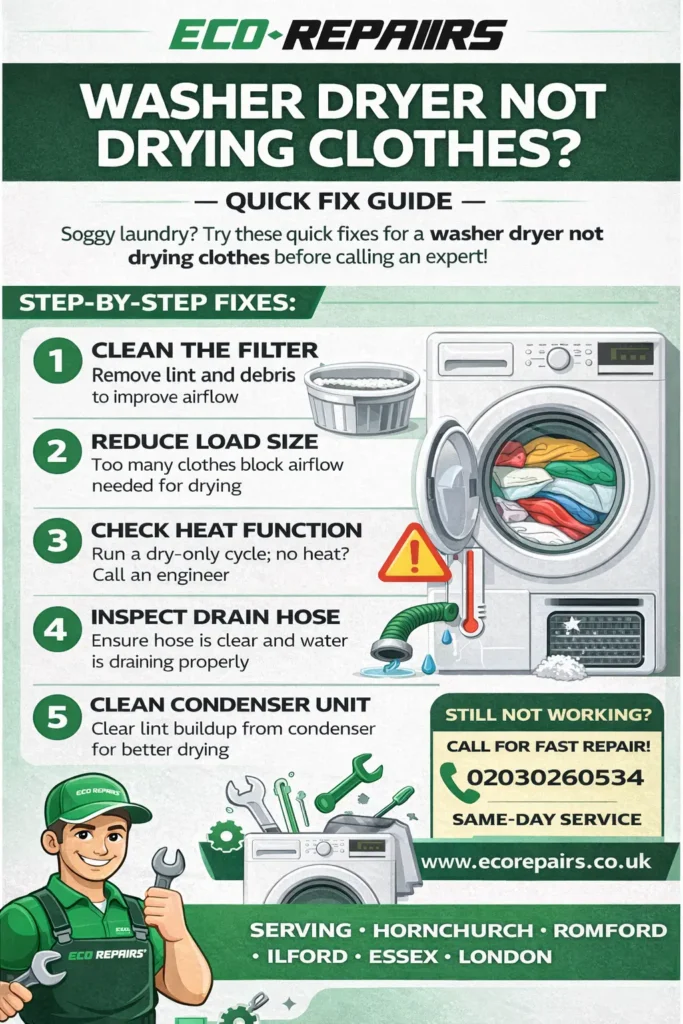
If you’re wondering, “Why is my washer dryer not drying my clothes?”, here are the most common culprits:
1. Blocked Filter or Pump
A clogged filter restricts airflow and drainage.
Signs:
- Clothes come out damp
- Machine takes longer than usual
- Water not draining properly
This is one of the top issues we fix in Front load washer dryer not drying clothes Ilford cases.
2. Overloaded Drum
Too many clothes = poor air circulation.
Reality check:
Even if it washes fine, drying needs space for heat and air to move.
. Faulty Heating Element
No heat = no drying.
Common in brands like:
- Hoover washer dryer not drying
- Zanussi washer dryer not drying
If your machine runs but stays cold, this is likely the issue.
4. Blocked Condenser or Vent
Dryers rely on airflow. If blocked:
- Moisture stays trapped
- Clothes remain damp
- Machine overheats
5. Door Lock or Sensor Issues
Modern machines won’t dry properly if sensors fail.
6. Drainage Problems
If water isn’t fully drained, drying becomes ineffective.
Related issue: Dishwasher not draining water also shares similar drainage faults.
Watch this quick video to see why your washer dryer is not drying clothes and how to fix common issues like blocked filters and heating faults.
Washer Dryer Not Drying Clothes – Step-by-Step Fix Guide
Before calling an engineer, try these practical steps:
Step 1: Clean the Filter
- Remove lint and debris
- Rinse under warm water
Step 2: Reduce Load Size
Run a smaller cycle and check results.
Step 3: Check Heat Function
Run a dry-only cycle:
- No heat? Likely heating element failure
Step 4: Inspect Drain Hose
Make sure:
- No bends or blockages
- Water flows freely
Step 5: Clean Condenser Unit
Especially for condenser washer dryers:
- Remove lint buildup
- Improve airflow
Step 6: Reset the Machine
Sometimes a simple reset fixes sensor glitches.
Real-Life Appliance Problems (Not Just Theory)
Washing Machine Issue
A customer in Romford had a washer dryer that washed perfectly but never dried.
Problem: Blocked condenser + overloaded drum
Fix: Deep clean + usage guidance
Result: Fully working same day
Dishwasher Issue
Another home in Ilford reported standing water.
Cause: Blocked pump
Solution: Cleared debris + filter clean
Learn more via appliance repair specialists guidance
Oven Issue
An oven not heating properly can mirror dryer faults.
Cause: Heating element failure
Fix: Replacement by professional repair services
Why Choose Us for Appliance Repairs?
When your Washer Dryer Not Drying Clothes, you need more than guesswork.
Local Experts
We serve:
- Hornchurch
- Romford
- Ilford
- Dagenham
- Upminster
- Brentwood
- Rainham
Fast Same-Day Service
We understand urgency. Laundry can’t wait.
Skilled Engineers
Experienced in:
- Hoover appliances
- Zanussi systems
- All major brands
Reliable & Trusted
Better than generic services like competitors because we focus on real fixes, not temporary patches.
Book appliance repair today
Visit our appliance repair specialists page
Contact us via book appliance repair
Areas We Cover
We proudly offer professional repair services across:
- Ilford
- Romford
- Hornchurch
- Dagenham
- Upminster
- Brentwood
- Rainham
- Essex & Greater London
Maintenance Tips to Avoid Dryer Problems
Clean Filters Weekly
Lint buildup is silent but deadly for dryers.
Don’t Overload
Follow manufacturer limits strictly.
Use Correct Settings
Different fabrics need different drying cycles.
Regular Servicing
Annual maintenance prevents major breakdowns.
According to energy efficiency advice from reputable sources like the Energy Saving Trust, proper appliance maintenance improves performance and lifespan.
Keep Ventilation Clear
Blocked airflow = poor drying.
Bonus Tip: How to Dry Clothes Without a Dryer or Clothesline
If your dryer fails unexpectedly:
- Use a heated room with airflow
- Hang clothes near a fan
- Use a towel roll technique to remove excess water
Not ideal, but a temporary fix.
Benefits of Professional Repair
Still asking: Why is my washer dryer not drying my clothes?
Here’s why calling an expert matters:
- Accurate diagnosis
- Safe repairs
- Long-term solution
- Avoid further damage
Consumer advice platforms like Which? recommend professional checks for recurring appliance faults.
External Link: https://www.which.co.uk/
Strong Call To Action
Don’t let damp clothes ruin your day.
Call now: 02030260534
Book same-day repair
Trusted local engineers ready to help.
FAQs
1. Why is my washer dryer not drying my clothes?
Usually due to blocked filters, heating issues, or overloading.
2. Can I fix a washer dryer myself?
Simple issues like cleaning filters can be DIY, but electrical faults need professionals.
3. How do I know if the heating element is broken?
If the machine runs but produces no heat, it’s likely faulty.
4. When should I call an engineer?
If basic troubleshooting doesn’t fix the issue or the problem repeats.
5. Is it safe to keep using a faulty washer dryer?
No. It can cause further damage or safety risks.
Final Thought
A Washer Dryer Not Drying Clothes isn’t just an inconvenience, it’s a signal your appliance needs attention.
Fix the small issues early, and when in doubt, call a trusted local expert.
Same-day service available – book now and get your laundry back on track